

Planning your wedding flowers can feel overwhelming fast. Too many styles, too many choices, too little time. Floral wedding arrangements set the entire tone for your big day and getting them right matters more than most couples realize.
Your venue, your season, and your personal style all shape what works best. Get this part wrong, and even a beautiful space can feel disconnected. Get it right, and every photo, every moment, feels exactly like you planned it.
This guide breaks down how to match floral wedding arrangements to your specific venue and wedding style. No fluff. Just practical advice you can use today.
Why Your Venue Should Drive Your Floral Choices
Your venue is the canvas. Your flowers are the paint. Choose arrangements that fight space, and nothing looks quite right.
A vaulted ceiling calls for height. Think of floating installations or suspended greenery that draws the eye upward. A modern, minimalist venue needs restraint. One sculptural piece often makes a stronger statement than ten small ones.
Outdoor garden venues already have natural beauty built in. Your flowers should complement that, not compete with it. Loose, free-form arrangements with uneven edges and soft movement tend to work best here.
Ballrooms and grand halls can handle drama. High centerpieces, layered florals, and dramatic floor arrangements near the head table all add to that elevated feeling guests notice the moment they walk in.
Matching Arrangements to Your Wedding Style
Every wedding has a personality. Your florals should match it.
Minimalist weddings call for monofloral bouquets. Pick one flower type, vary the shades, and let simplicity do the work. A single rose variety in three tones looks more intentional than a mixed bouquet ever could.
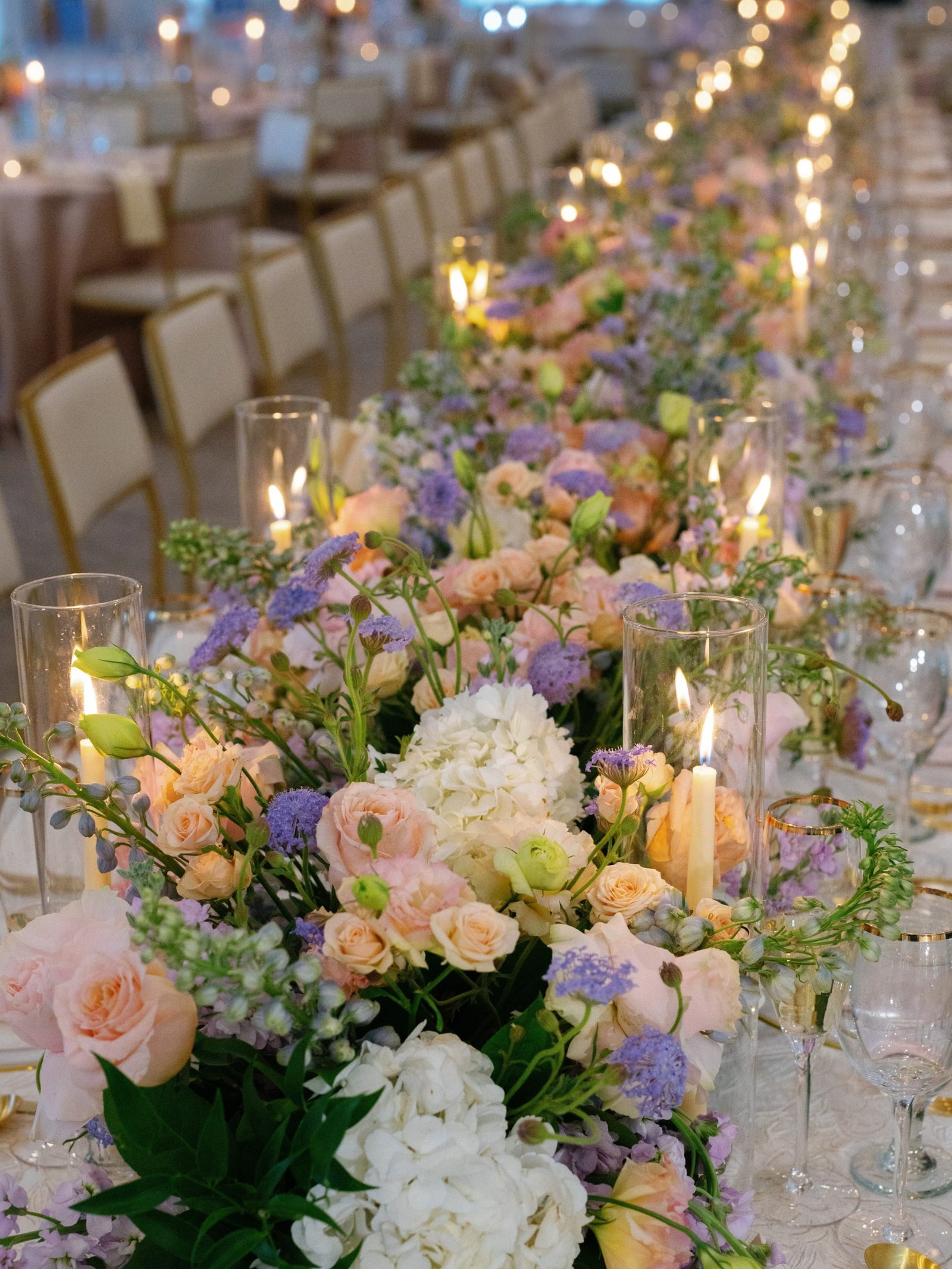
Romantic, classic weddings lean into soft neutrals. Cream, ivory, and blush tones layered with garden roses, ranunculus, and lisianthus create that timeless, elegant look couples often picture first.
Modern editorial weddings thrive in contrast. Pair delicate blooms with rough textures or geometric vessels. Soft flowers against angular structures create a curated, magazine-ready look without trying too hard.
Garden and botanical weddings focus on greenery first. Use different leaf shapes and textures as your base, then add blooms only where they matter most. This approach also tends to be more budget friendly.
Choosing the Right Arrangement Types
Different parts of your wedding need different floral structures. Here’s what typically works where:
- Ceremony arches frame your vows and anchor your photos. Asymmetrical designs feel more natural than perfectly symmetrical ones.
- Aisle arrangements guide guests’ eyes toward you. Cascading greenery along the aisle edges creates a lush, immersive walk.
- Centerpieces anchor your reception tables. Keep them low enough for guests to talk across the table or go tall and dramatic if you want a showstopper.
- Bouquets are the most photographed flowers of the day. Free-form, garden-inspired shapes photograph better than stiff, round designs.
- Boutonnieres deserve attention too. Two or three focal flowers, paired with unusual foliage, show real craftsmanship.
Why Luxury Wedding Floral Arrangements Look Different
Luxury wedding floral arrangements aren’t just bigger or more expensive. They’re more intentional.
Every stem earns its place. Every color choice supports a bigger story. Instead of filling space, designers create negative space on purpose, letting key blooms stand out.
Luxury florals also respond directly to the venue. A floating vine meadow under a vaulted ceiling. A single sculptural piece in a sleek, modern space. The arrangement works with the architecture, not against it.
Texture plays a bigger role, too. Combining smooth garden roses with rougher, handmade vessels or structural greenery creates depth you notice without quite knowing why.
Seasonal Considerations That Affect Your Choices
Flowers in season look better and cost less. It’s that simple.
Asking your florist what’s strongest during your wedding month leads to fresher blooms and fewer last-minute substitutions. Peonies aren’t available year-round, but garden roses can achieve a nearly identical look when timed right.
Seasonal sourcing also affects your color palette. Spring brings softer pastels naturally. Fall leans into deeper, richer tones without forcing the look.
Practical Tips for Wedding Floral Arrangements
A few decisions make planning easier and protect your budget:
- Tell your florist whether color, shape, or overall mood matters most to you. This helps them make smart substitutions if a flower becomes unavailable.
- Put your budget toward photo-heavy moments first, like your bouquet and ceremony backdrop.
- Reuse ceremony arrangements at your reception when the layout is allowed. This saves money without a sacrificed impact.
- Ask about sustainable options early. Foam-free designs and biodegradable materials are increasingly available, though they may affect labor and cost.
Bringing It All Together
The best wedding floral arrangements feel personal, not generic. They reflect your venue, your style, and the story you want your wedding day to tell.
Whether you want a romantic garden to feel, a bold modern statement, or elegant luxury wedding floral arrangements that transform your venue completely, the right florist makes all the difference. Visit XO Bloom to talk through your vision and bring your wedding flowers to life with the care and detail your day deserves.
Frequently Asked Questions
How far in advance should I book my wedding florist?
Most couples book six to twelve months ahead, especially during peak wedding season. Popular florists fill up fast, so earlier is always safer.
What is the average cost of floral wedding arrangements?
Costs vary widely based on flower type, arrangement size, and venue scale. Bouquets typically start around $150, while full event florals can range much higher depending on scope.
Can my florist work with my exact venue and color scheme?
Yes. A skilled florist visits or reviews your venue first, then designs arrangements that complement its architecture, lighting, and existing color palette.
What if my favorite flower isn’t in season for my wedding date?
Your florist can recommend similar alternatives. Garden roses, for example, closely resemble peonies and stay available longer throughout the year.
Do I need different florals for my ceremony and reception?
Not always. Many couples repurpose ceremony arrangements for the reception, saving money while keeping a consistent look throughout the day.